The Bite Back report highlights that many students feel pushed towards quick grab-and-go items not because they are the healthiest, but because they are the most accessible or affordable.
Adding to this pressure, HCL understands that with the true cost of producing a nutritious school meal now around £3.45, the widening funding gap continues to pressure school budgets and limit the choices available to families.
HCL, along with many other dedicated school caterers, continues to work tirelessly to provide balanced choices, but they are operating within an ecosystem where students can easily leave school and access a wide array of options on the high street.
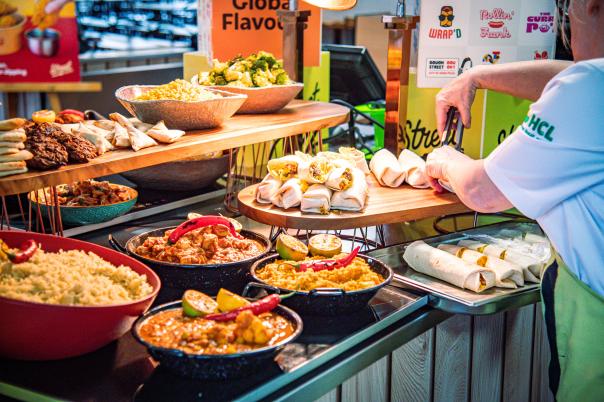
In direct response to these real-world challenges, HCL developed Street Eats. A new street‑food‑style approach to secondary school meals which was developed through research and insight into student needs and school environments. Its purpose aligns closely with many of the issues highlighted in the Bite Back findings.
Street Eats is a healthier grab‑and‑go concept, built around:
- Diverse Global Flavours: Nine (and growing) distinct sub-brands are inspired by street food from around the world, directly addressing the report’s call for more varied and culturally relevant options.
- Fresh, Balanced Dishes: HCL focus on offering healthier choices that students recognise and genuinely want to eat.
- Daily Variety: The menus rotate regularly to maintain interest and provide continuous nutritional diversity, combating 'menu fatigue'.
- On-Site Retention: Street Eats is designed to keep students on site, reducing their reliance on external, often less healthy, high street outlets.
- Cultural Relevance: The diverse offerings reflect and celebrate the varied cultural backgrounds within school communities.
Street Eats explicitly avoids the high-fat, ultra-processed products often prevalent in commercial grab-and-go environments. HCL do not offer items such as sausage rolls, and while pizza is part of the offering, it is freshly made, of higher quality, and appears only once a week as part of a carefully balanced menu cycle.
John Want, chief executive at HCL, commented: “Bite Back’s report shows clearly that too many students’ dietary habits are being shaped by an environment where convenience and cost override nutrition. When lunchtimes are short, dining spaces are full and the high street is only steps away, young people often end up with less choice than we assume.
“Street Eats was developed as a practical response to these real challenges: a way to offer quicker, healthier and more diverse grab‑and‑go dishes that students actually want, built on fresh ingredients and shaped with their input. It isn’t about copying high‑street fast food; it’s about giving students better options within the limits they face every day.
“But the report also reinforces that caterers cannot do this alone. Without funding that reflects the true cost of a nutritious meal, schools will continue to be under pressure. We support Bite Back’s call for a system that puts young people’s voices, health and wellbeing at its centre.”
Street Eats incorporates regular student ‘Foodie Forums', creating essential opportunities for feedback and fresh flavour ideas. HCL says this ‘innovative' concept underscores their ‘unwavering commitment’ to delivering high-quality, nutritious, and engaging meal solutions.
By bringing appealing, healthier food on-site, Street Eats actively contributes to reducing off-campus dining, offering superior quality and competitive pricing, all designed to boost student satisfaction and strengthen school communities, thereby supporting the overall health and wellbeing of young people.