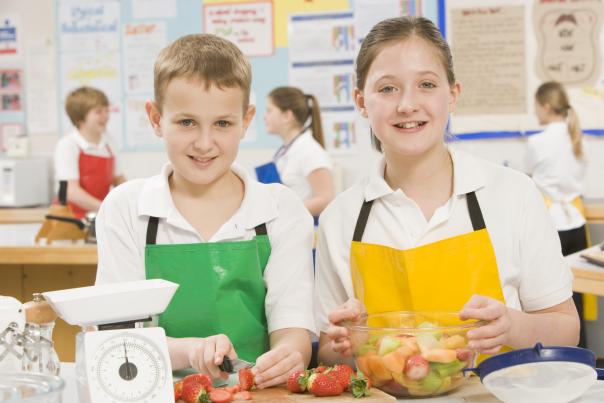
The report, called Hungry for Change, has been published by The School of Artisan Food’s Best Food Forward programme, with opinion research from Public First.
The report’s authors say it shows overwhelming agreement that cooking healthy meals and making good food choices are essential life skills, comparable in importance to digital literacy or physical exercise, and vital for independence in adult life. But they warn also that access to food education is ‘fragmented, inconsistent, and insufficient’.
They say: “Fewer than half of young people report receiving dedicated curriculum time, with access declining sharply with age and varying significantly by income, school type, and region. State educated pupils and pupils from lower-income households are markedly less likely to receive consistent food education.”
As a result the report calls on the Government to:
- Make food a core subject for all - extend and prioritise food education as a core subject across Key Stages 1-4, on par with subjects like PSHE, citizenship and PE, with its importance reflected in consistent curriculum time.
- Appoint school food leads - require multi-academy trusts to appoint a specialist food education lead responsible and accountable for embedding a whole school approach to food learning, with local authorities doing likewise for maintained schools.
- Restore Food A-level - ensuring there are formal assessment pathways at A-level into careers in food preparation, production and nutrition, as an important part of the government’s review into study options for food and nutrition at Level 3.
Jenny Paxman, chief executive of The School of Artisan Food said: “Hungry for Change reinforces what we have seen consistently through our work: food education can be transformational when it is done well, but access is far from equal.
“This report shows that too many children are missing out on skills that are fundamental to health, confidence and independence. If we are serious about improving outcomes, food education must be treated as a core part of school life for every child.”
And Lauren Rathbone, director of social impact with Best Food Forward, added: “This report builds directly on the Food Education Mapping Project and shows that the same patterns we saw in schools are reflected nationally.
“Young people value food education, but provision is fragmented and falls away just as independence grows. The evidence is clear: when pupils can learn it, see it and live it, the impact of food education is amplified. The challenge now is scaling that approach, so it is consistent and equitable.”
Key findings from the report, include 97% of parents and 91% of young people saying they see cooking healthy meals and making good food choices as an important or essential life skill.
However, only 48% of young people report receiving any dedicated class time for food education, while nearly one in four young people (23%) say their school does not meaningfully promote food or healthy eating at all.
The report also highlights the inequality gap, with responses indicating that children from households with an income under £45,000 are 24 percentage points less likely than children from more affluent households (earning six-figures plus) to receive dedicated time for food education in school (41% vs 65%).
And state comprehensive pupils are 24 percentage points less likely to receive food education than those in private schools (46% vs 70%).
National Curriculum guidance for core food education goes only up to KS3, meaning access to food education drops from 56% at ages 11 to 12 to just 32% by ages 17 to 18. The report draws on nationally representative polling of over 2,000 parents and 2,000 young people aged 11 to 18.