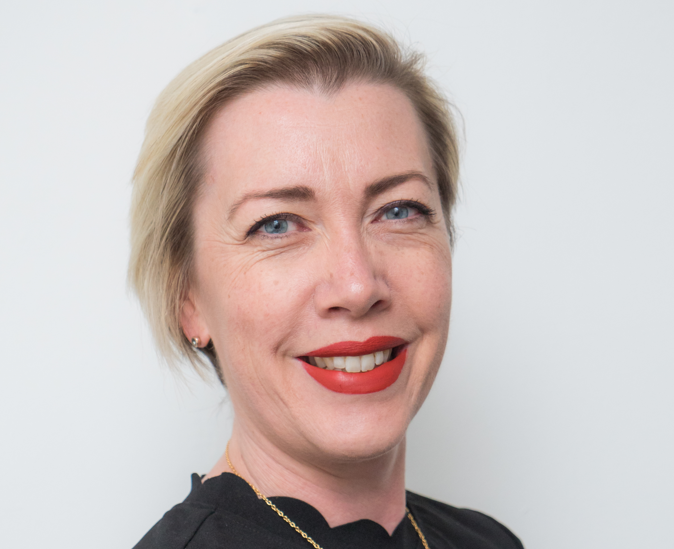
That is to say I'm remaining in the world of food systems transformation, so you don't quite get rid of me.
I have very mixed feelings about stepping away from my work in public food, and I know that I will miss my colleagues, industry friends and our customers - patients, visitors, residents in care homes, children and young people, immeasurably. Those we serve every day, and the staff who work so hard to provide those meals, have been my anchors, and not a day goes by when I don't consider them in my decision-making or in what I'm saying on behalf of our industry.
I hope that I have made some small, positive changes in the past year to how wider food systems thinkers consider public food.
I have taken great care to try to represent as wide a view as possible across our industry, often speaking out, and speaking uncomfortable truths in virtual rooms when people needed to hear the impact of their decisions on our customers and our staff.
I know I'm leaving the Public Sector Catering Alliance in excellent hands, with Anita Brown stepping into the role of chair in January, and I'm sure you will all give her the support you have given me. It's a real privilege to represent the public sector, and I hope Anita is able to take this organisation from strength to strength, and to continue to speak up and speak out on behalf of everyone involved in public food.
I want to use part of my final Blog post to sound an alarm bell to political decision makers and others with influence over our work. We are heading into 2026 in a very precarious position, particularly in England, where the good quality, local service provision of school meals is in real danger of erosion, and local authority and arms-length external organisation (ALEO) provision may well become a footnote in the history books of public food provision.
Make no mistake, the defunding of school meals in particular - and public food in general - is having real and tangible consequences. It is having an impact on nutrition, local food economies, local employment, health inequalities, on the consequences of poverty, on pupil choice and pupil voice.
It is affecting, too, all the prevention work that politicians most often, in our experience, laud as ‘the answer’ and yet in their decisions seem only to pay lip service to.
We saw, for example, in the newly published Child Food Strategy reference to the value the UK Government places on the importance of free school meals. Yet the services that are actively delivering them are at greater risk than ever.
The voices of caterers have been sidelined for too long while different groups have campaigned on systems-related matters. Too few, though, have been interested in understanding the power of the local provision of those meals.
And we are now seeing in-house local authority and arms-length catering provision collapse due to a lack of any understanding of the unique opportunities these service styles bring. The result is a lack of funding in school food to protect the integrity of fair pay for staff and investment in good quality ingredients.
And the consequences are that local authorities like Hampshire, Leicestershire, Nottinghamshire, as well as CATERed in Plymouth, are ceasing their school meals provision and pulling away from the fundamental services they have, until recently, delivered. Please take the time to read CATERed’s statement.
Does anyone in power care about the consequences for those pupils, for the hard-working caterers facing job losses, for those schools and their staff who now need to pick up the pieces, or for the local suppliers who are invested in supplying those meals services?
This has happened whilst we have been focusing on other things: We have all taken our eye off the ball – how on earth do you deliver these services without a service in the first place?
Further fragmentation is now placing the burden on individual schools, or a swing to a more centralised, multi-national provision that doesn't have that local connection to people, to community, and to place.
Meanwhile, we see many turn a blind eye to the damage that is being done to these services across the country, because it's happening behind the scenes in kitchens, and in school offices each and every day while Government continues to court ‘Big Food’ in its expansion of policy areas like breakfast provision.
The fragmentation of policy-making, the lack of systemic thinking, and the lack of awareness of the impact of fiscal and policy decisions on a core prevention intervention like school meals, is staggering. This is happening on their watch, and ours.
As I step away from the PSC Alliance, I want to offer a challenge – a call to action. What are you, dear reader, going to do about this?
How will you, as someone with an interest in public food, going to act to prevent this key service from disintegrating. And how are you going to hold decision-makers to account?
What will you do to keep services rooted in communities, in places where local opportunities are seen as connectors to place, to people, and to society?
And if you are a campaigner, how will you continue to work on your campaign priorities if we no longer have solid catering services in place to actually deliver what you're calling for. How can you pivot to support the very organisations needed to deliver your work?
In January, as I step into my new role as chief executive of the newly formed Scottish Food Commission, please be assured that my interest in public food and my passion for food systems transformation will continue to grow.
I'll be actively supporting, and holding decision-makers (in Scotland) to account for their decision-making, and I'll continue to reach out and learn from the four UK nations and beyond, as we all strive to improve our food system, to ensure it is more equitable, healthier, and sustainable for everyone.
And I will be bringing with me everything I have learned from the world of public food: A focus on the voices of customers and of the workforce, and an appreciation of how political decision-making has real consequences on food systems change. This is far from goodbye, more from me, and see you soon.
Finally, my thoughts are with all of the caterers across the country delivering their final festive meals of 2025, who are looking forward to a well-earned break over the festive period. My thoughts will, of course, be with those working hard to provide Christmas Day celebrations in hospitals, care homes, prisons and community settings. The work you do should never be sidelined, or undervalued, and we must continue to use our voices to ensure that decision-makers know it.